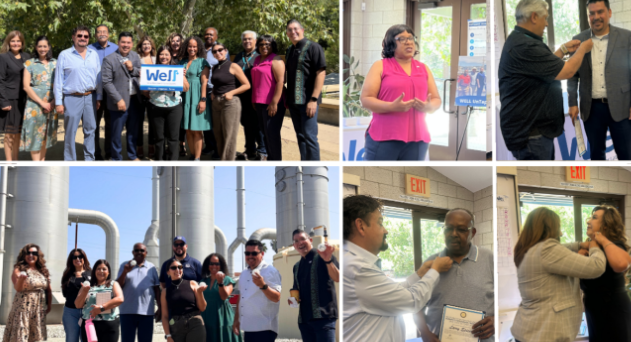
The Winter 2026 UnTapped Cohort consists of 6 elected officials from throughout the state of California. The fellows are traveling to different areas in California to learn about regional water challenges and best practices and to develop the leadership and interpersonal skills necessary to make a lasting impact on California’s water policy.
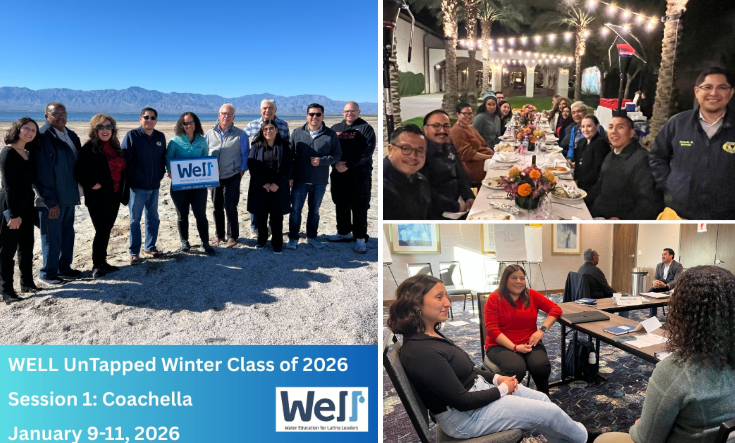
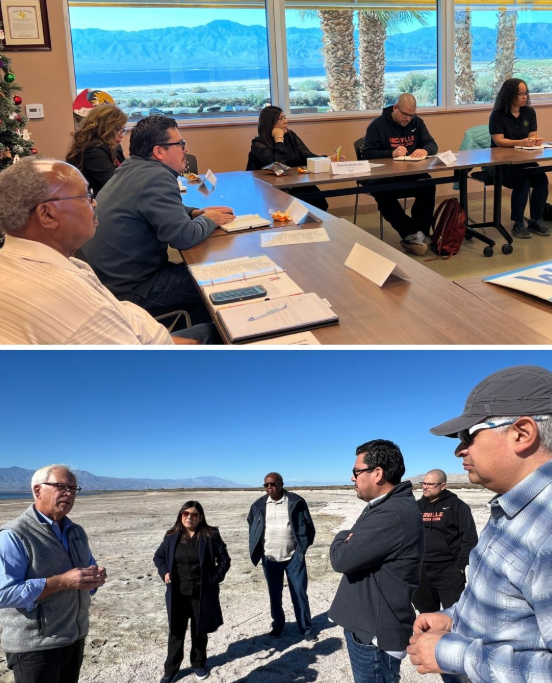
Session 1: Coachella
The UnTapped Fellowship Program launched its first session in the Coachella Valley, grounding fellows in California’s water policy landscape and the distinct water challenges facing their communities. This inaugural session introduced the WELL Method of Inquiry, equipping fellows with the tools to ask critical questions, gather relevant information, and apply that knowledge to informed decision-making in water policy and management. Through site visits, conversations with local leaders, and engagement with residents, fellows gained a deeper understanding of the region’s water issues and historical context.
The session began Friday evening with a welcome dinner hosted by the City of Coachella. The gathering included the presentation of a pozo—a ceremonial well symbolizing shared responsibility, community, and the life-sustaining importance of water—awarded to Eduardo Garcia, former Member of the California State Assembly, in recognition of his leadership and longstanding commitment to water equity and public service. During the dinner, a graduation medallion was also presented to Oscar Ortiz, Councilmember, City of Indio and Graduate, UnTapped Class of 2022, and welcome remarks were offered by City of Coachella Councilmembers Frank Figueroa and Denise Degaldo, graduates of the UnTapped Fellowship Program Winter Class of 2024, who warmly welcomed the cohort and emphasized the importance of culturally rooted leadership in water governance.
Guest speakers throughout the weekend included Cástulo Estrada, WELL Board Member and Vice President of the Coachella Valley Water District; Patrick O’Dowd, General Manager of the Salton Sea Authority; Monica Telles, Executive Manager at CalMex Rural Development LLC; and Peter Nelson, Director at the Coachella Valley Water District. These discussions provided valuable insight into the Salton Sea, the Colorado River, California’s water history, hydrology, and the financial systems that shape water management decisions.
The session also featured an on-site tour of the Salton Sea led by Patrick O’Dowd, along with a visit to Polanco Park, a mobile park community that has experienced long-standing challenges with water access and infrastructure. There, fellows met with residents who shared firsthand accounts of living without safe, clean, and affordable drinking water. Fellows further deepened their learning through an engaging lesson on California water history, policy, and hydrology presented by Dr. Samuel Sandoval-Solis, UC Davis Professor and WELL Curriculum Advisor.
As is WELL’s tradition, the session concluded with a unifying moment as fellows sang “De Colores,” celebrating community, solidarity, and shared purpose. We extend our sincere thanks to Cástulo Estrada and the City of Coachella for hosting a meaningful welcome dinner and helping set the tone for a powerful start to the UnTapped Fellowship journey.
Session 2: San Diego
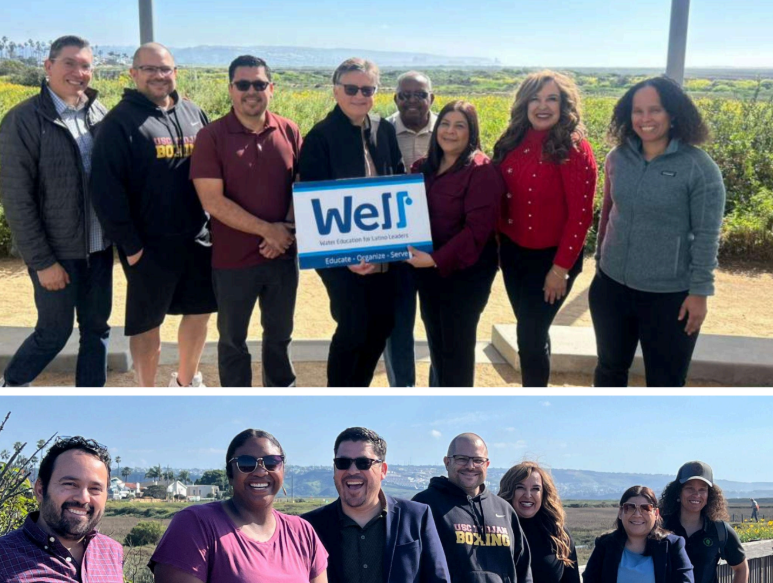
From Friday, February 6, to Saturday, February 7, 2026, the UnTapped Fellowship Winter Class of 2026 convened in the San Diego region for an immersive session focused on cross-border collaboration and
environmental challenges.
The session began with a guided tour of the Tijuana River National Estuarine Research Reserve, led by Empress Holliday, during which fellows explored transboundary water issues and the estuary’s ecological significance. Participants then interviewed Chris Helmer, Environmental and Natural Resources Director for the City of Imperial Beach, and attended a presentation on water governance by Brian Barreto, External Affairs Manager, Southern California, California American Water and member of the WELL Advisory Council, who discussed key distinctions between private and public water agencies.
On the second day, fellows participated in an intensive Public Narrative training facilitated by Victor Griego, Founder and President of WELL, with support from Executive Director Paul Hernandez. Public Narrative, a leadership framework developed by Marshall Ganz of the Harvard Kennedy School, equips leaders to inspire action through storytelling. Through the Story of Self, Story of Us, and Story of Now, fellows strengthened their public speaking skills and learned how to mobilize others around shared
values and collective purpose.
This session provided fellows with essential tools to navigate the intersection of water policy, community engagement, and environmental justice—preparing them to lead meaningful, community-centered change in their regions.
Session 3: Tehachapi
The WELL UnTapped Fellowship Winter Class of 2026 held its third session in Tehachapi, California, focusing on two key topics: Water Conveyance Systems and Whose Water Is It?
The cohort’s discussions with Jordi Vasquez, an Environmental Scientist at the California Department of Water Resources, deepened their understanding of the state’s conveyance systems and the policies that govern them. Erick Orellana, Senior Policy Advocate at the Community Water Center, provided insight into the legal complexities of water rights and their impact on disadvantaged communities. Melissa Bergen, Community Development Specialist at Self-Help Enterprises, highlighted the challenges of ensuring equitable water access.
The cohort also participated in the WELL Groundwater Game, an interactive simulation that highlights the complexities of groundwater management. By assuming roles like farmers and water agencies, participants navigated real-world challenges, reinforcing the importance of sustainable practices and collaboration under the Sustainable Groundwater Management Act (SGMA).
Session 4: Sacramento
On Friday, April 10, and Saturday, April 11, the UnTapped cohort gathered in Sacramento for a powerful experience grounded in learning, reflection, and connection.
On Friday, the cohort engaged in meaningful conversations with water leaders shaping California’s future. The participants had the opportunity to hear directly from Nina Hawke, Chief of Bay-Delta Resources/Group Manager, Bay-Delta Initiatives, Metropolitan Water District and Kyle Jones, Consultant and Representative from Restore the Delta, gaining insight into both perspectives of the Delta Conveyance Project—exploring views for and against it. These conversations challenged the local elected leaders to think critically about water policy, equity, and impact.
That evening, the cohort was joined by Mario Enriquez, Councilmember, City of Stockton and UnTapped Graduate, Class of 2025, who shared his journey and reflections on leadership, offering inspiration and a real-world example of the impact of this work.
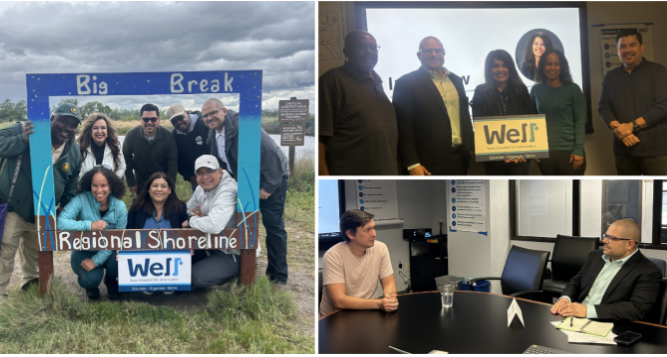
On Saturday, Dr. Samuel Sandoval-Solis, UC Davis Professor and Policy and Curriculum Advisor, WELL, joined participants to explore the Sacramento-San Joaquin River Delta, touring the historic Town of Locke, visiting restoration sites at Big Break, and going behind the scenes at the UC Davis Fish Lab. These hands-on experiences deepened our understanding of water systems, environmental challenges, and community resilience.
Session 5: Los Angeles
The UnTapped Fellowship Winter Class of 2026 gathered in Pasadena for the start of their final session, engaging in a conversation on water rates and affordability with Stacie Takeguchi, Chief Assistant General Manager at Pasadena Water and Power (PWP) and WELL Educate 2 Lead Faculty Member.
The cohort also explored local watershed systems through an immersive tour of the Arroyo Seco led by Brad Boman, Water Operations Manager; Jessica Hernandez, Senior Customer Program Analyst; and Isabel Ellis, Associate Engineer, all from PWP. The day created space for reflection, dialogue, and a deeper understanding of how local water systems connect to the communities they serve.
On Saturday, the cohort continued their learning with a tour of the Valley County Water District (VCWD) facility, focusing on water contaminants and urban water infrastructure. The day was followed by a discussion on Tribal water relationships and governance with Samuel Lopez, Development Director for the Gabrieleno San Gabriel Band of Mission Indians. Fellows also participated in a legislative workshop overview led by Juanita Doplemore, Trustee at Compton Community College and UnTapped Graduate, Class of 2024. Juanita shared insights from her experience organizing and leading a successful water workshop, offering valuable lessons in advocacy and community engagement.
The weekend concluded with a graduation ceremony, joined by Sally Flowers (Former Councilmember, City of Artesia; UnTapped Graduate, Inaugural Class; and WELL Boardmember), who shared uplifting words with the graduating class. We celebrated the accomplishments of the Winter Class of 2026 and welcomed them into the WELL UnTapped Network. The Fellows were pinned during the graduation ceremony by WELLos (a graduate of the UnTapped Fellowship), who recruited them into the cohort.
We are proud to celebrate this milestone with our recent graduates.